

Home » YES » YES – Awareness Campaigns » Bullying
YES
Thirteen plain-language graphics from Bullying Prevention Month — what bullying is, how to spot it, and how families can help.
These images were shared during National Bullying Prevention Month in October 2026. They explain what bullying is, the forms it takes online and off, the warning signs to watch for, and how families can help children stand up for each other. They were initially published on our Facebook page.
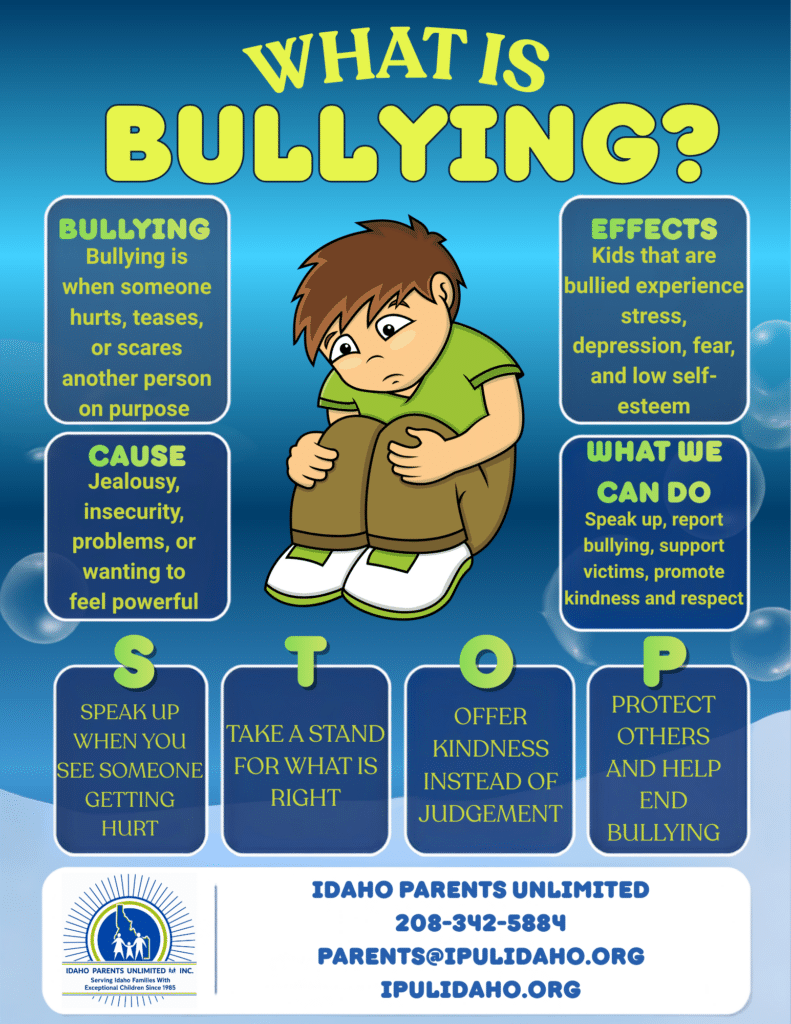
When someone hurts, teases, or scares another person on purpose, that’s bullying. Here is a simple way to help kids remember what to do: Speak up, Take a stand, Offer kindness, and Protect others.
What is bullying?
Bullying: Bullying is when someone hurts, teases, or scares another person on purpose.
Effects: Kids that are bullied experience stress, depression, fear, and low self-esteem.
Cause: Jealousy, insecurity, problems, or wanting to feel powerful.
What we can do: Speak up, report bullying, support victims, promote kindness and respect.
S – Speak up when you see someone getting hurt.
T – Take a stand for what is right.
O – Offer kindness instead of judgement.
P – Protect others and help end bullying.
Idaho Parents Unlimited
208-342-5884
parents@ipulidaho.org
ipulidaho.org
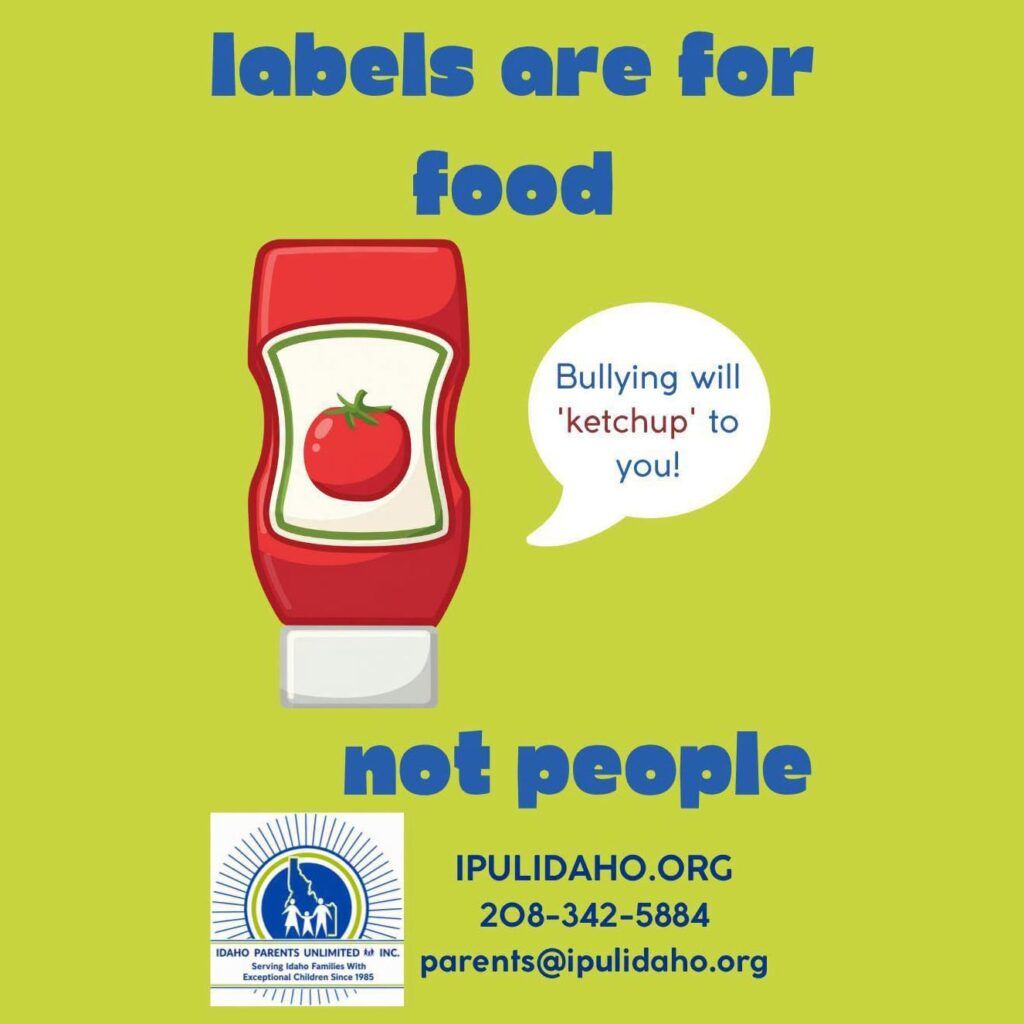
Labels belong on ketchup bottles, not on kids. Talk with your child about how name-calling hurts, and how they can stand up for others.
labels are for food
not people
Bullying will ‘ketchup’ to you!
ipulidaho.org
208-342-5884
parents@ipulidaho.org
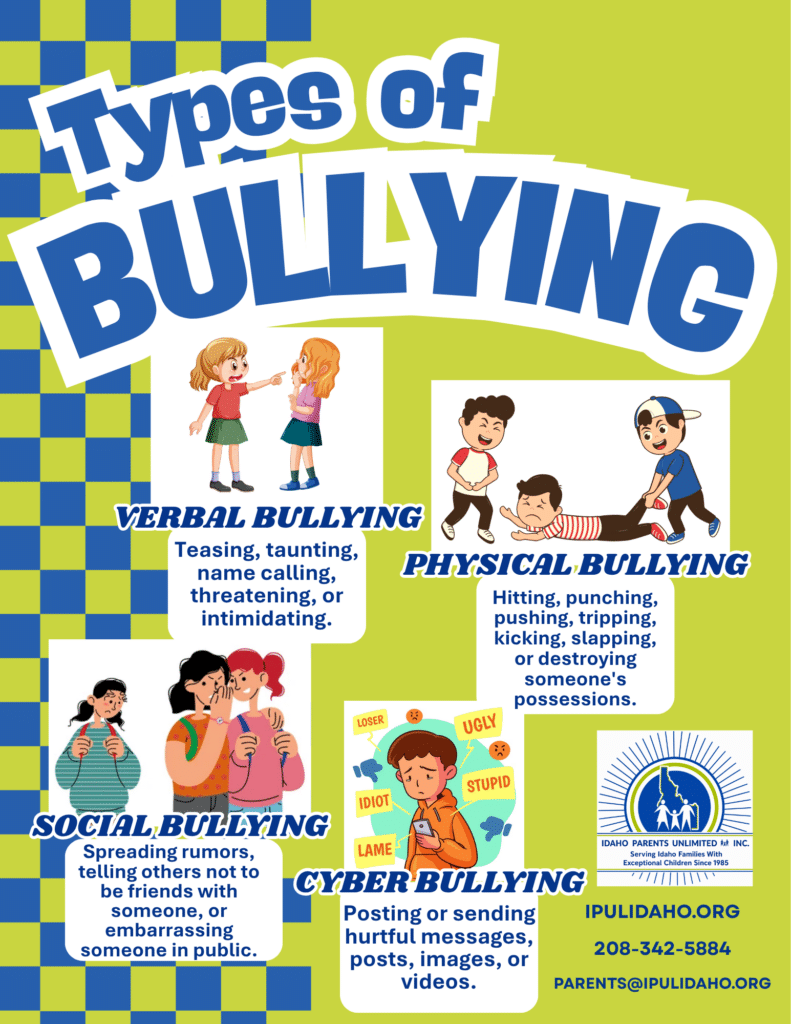
Bullying isn’t only hitting or pushing — it can be words, being left out, or hurtful messages online. Knowing the types helps you spot it and talk with your child about it.
Types of bullying
Verbal bullying: Teasing, taunting, name calling, threatening, or intimidating.
Physical bullying: Hitting, punching, pushing, tripping, kicking, slapping, or destroying someone’s possessions.
Social bullying: Spreading rumors, telling others not to be friends with someone, or embarrassing someone in public.
Cyber bullying: Posting or sending hurtful messages, posts, images, or videos.
ipulidaho.org
208-342-5884
parents@ipulidaho.org
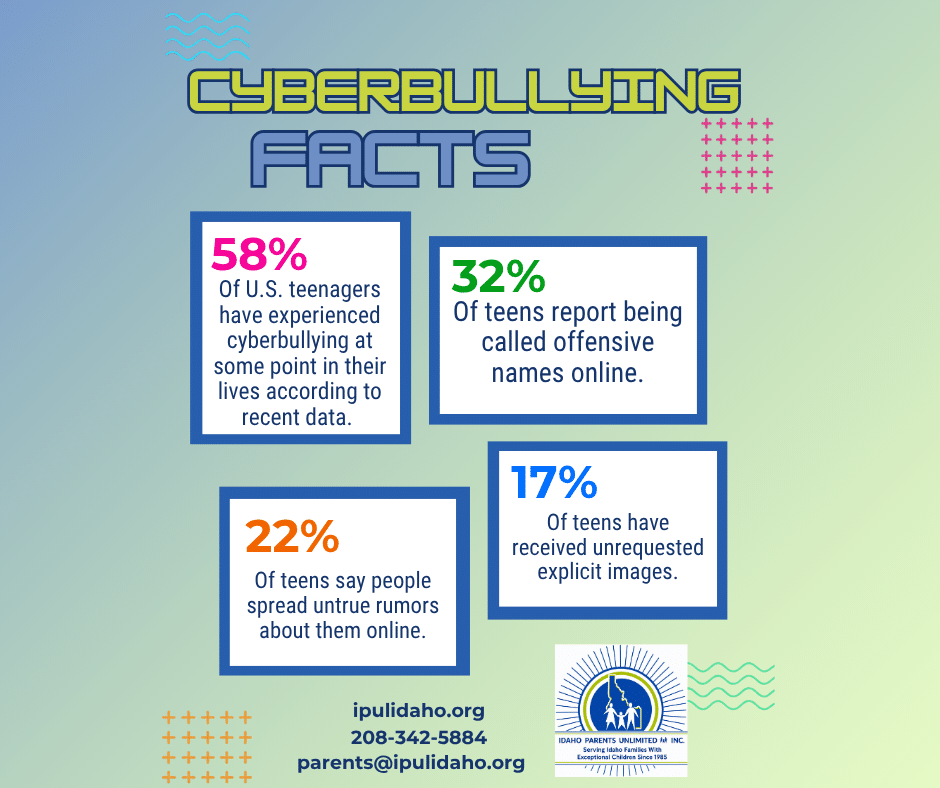
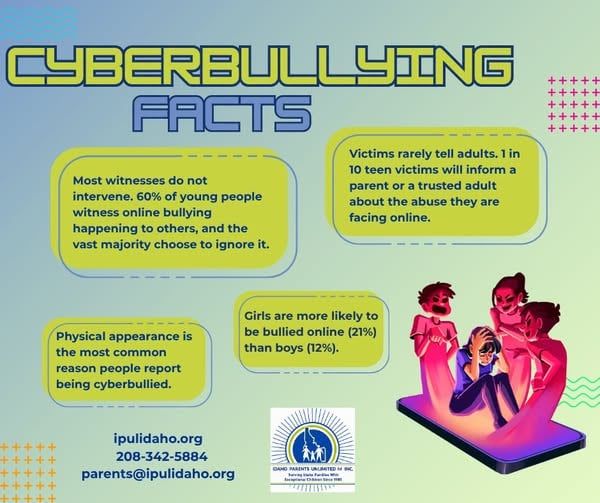
Cyberbullying is more common than many parents realize — more than half of U.S. teens say they have experienced it. Here are a few numbers worth knowing, so you can talk with your child about it.
Cyberbullying facts
ipulidaho.org
208-342-5884
parents@ipulidaho.org
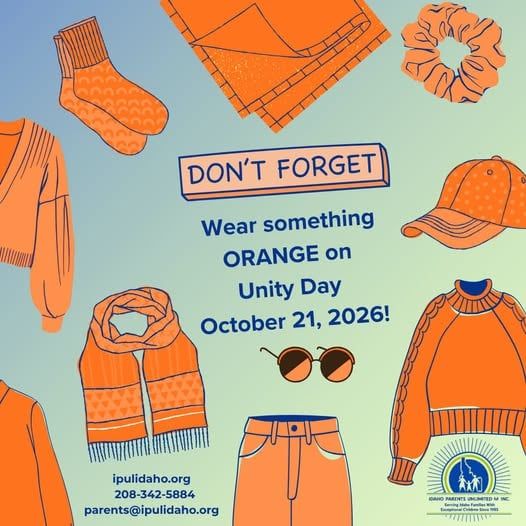
Don’t forget to wear something orange on Unity Day, Wednesday, October 21, 2026, to show that kindness, acceptance and inclusion matter.
Don’t forget
Wear something orange on Unity Day October 21, 2026!
ipulidaho.org
208-342-5884
parents@ipulidaho.org
A little kindness goes a long way. Help your child be the friend who reaches out, includes others and stands up when someone is being picked on.
Be a buddy, not a bully.
ipulidaho.org
208-342-5884
parents@ipulidaho.org
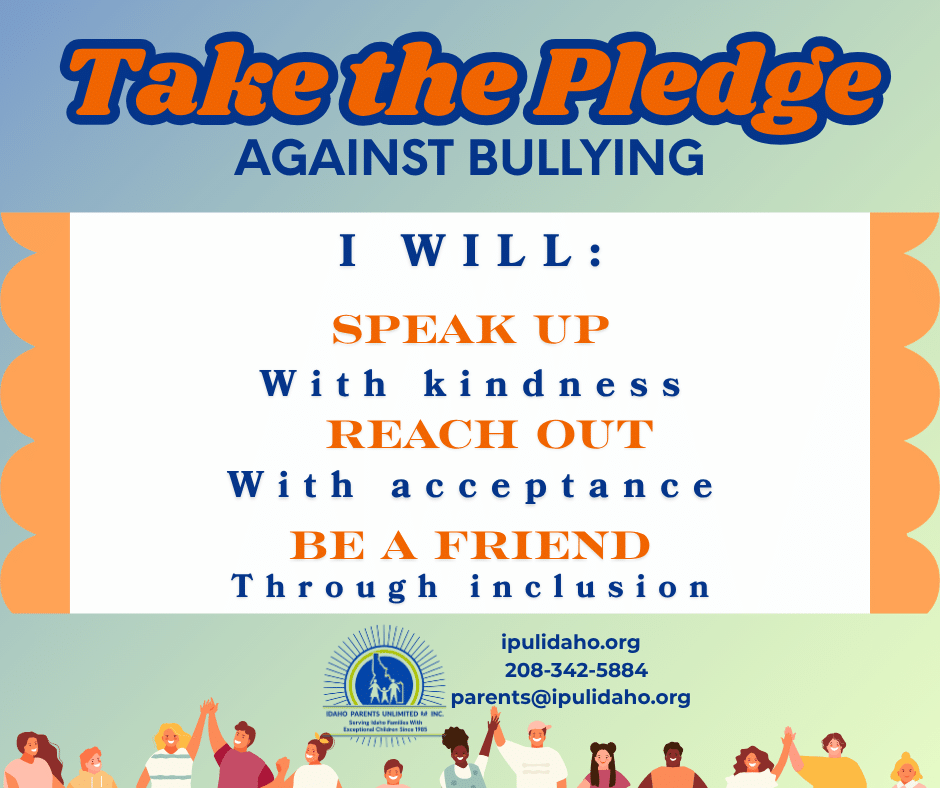
Bullying stops when people stand up together. Take the pledge with your family: speak up, reach out and be a friend.
Take the pledge against bullying
I will:
Speak up with kindness
Reach out with acceptance
Be a friend through inclusion
ipulidaho.org
208-342-5884
parents@ipulidaho.org
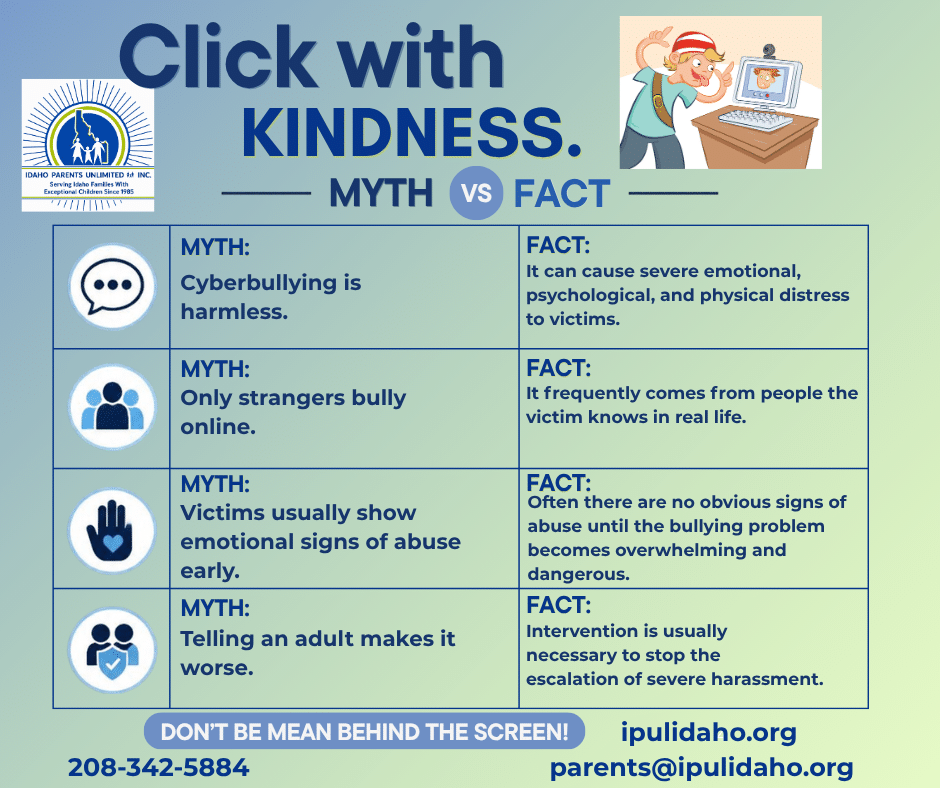
Cyberbullying isn’t harmless, and kids don’t have to face it alone. Here are four common myths about cyberbullying and the facts behind them.
Click with kindness.
Myth vs fact
Myth: Cyberbullying is harmless.
Fact: It can cause severe emotional, psychological, and physical distress to victims.
Myth: Only strangers bully online.
Fact: It frequently comes from people the victim knows in real life.
Myth: Victims usually show emotional signs of abuse early.
Fact: Often there are no obvious signs of abuse until the bullying problem becomes overwhelming and dangerous.
Myth: Telling an adult makes it worse.
Fact: Intervention is usually necessary to stop the escalation of severe harassment.
Don’t be mean behind the screen!
ipulidaho.org
208-342-5884
parents@ipulidaho.org
Most kids who see cyberbullying stay quiet, and most who are targeted never tell an adult. Talking with your child about what to do can make a real difference.
Cyberbullying facts
ipulidaho.org
208-342-5884
parents@ipulidaho.org
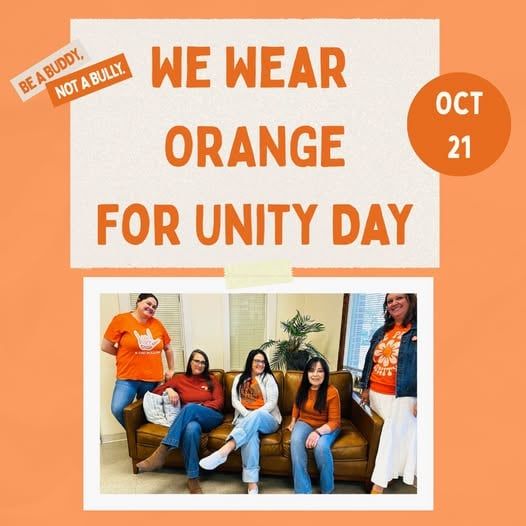
🧡 HAPPY UNITY DAY! 🧡
On October 21st, we wore orange to show that we stand together against bullying!
Be a Buddy, not a Bully
At Idaho Parents Unlimited (IPUL), we believe every child deserves to feel safe, supported, and accepted for who they are. Unity Day is a reminder that each of us has a role to play in creating kinder, more inclusive communities where all children can thrive.
We wear orange for Unity Day
Oct 21
Be a buddy, not a bully.
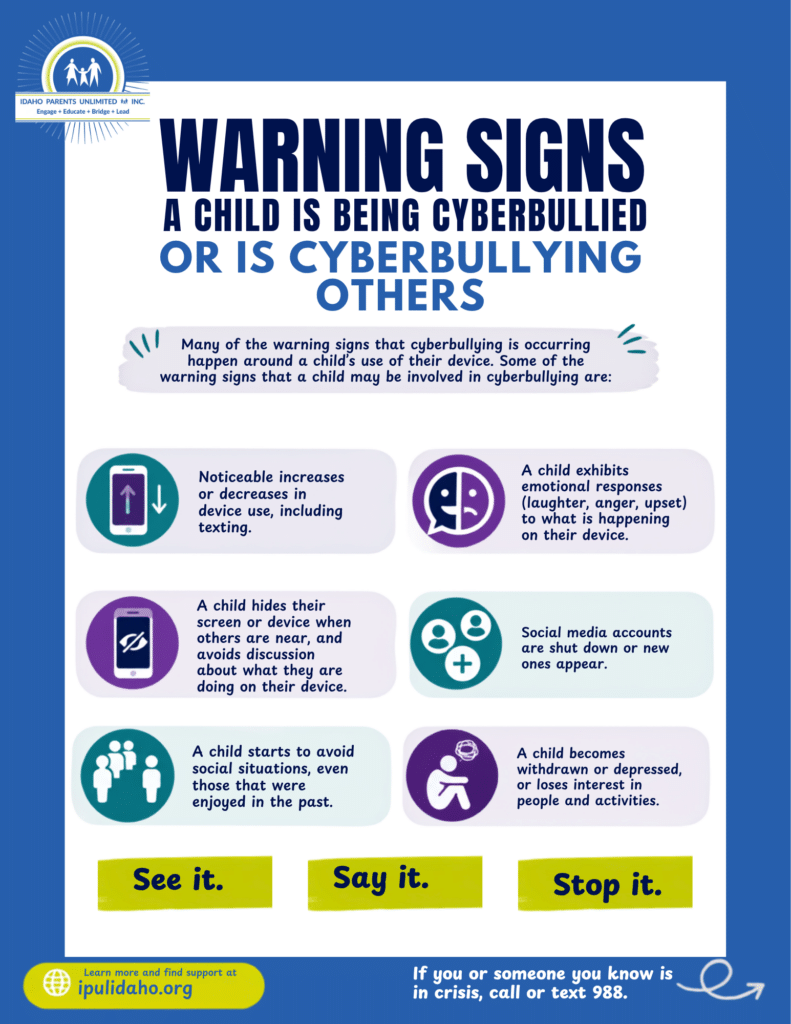
Would you know if your child was being bullied online, or bullying someone else? Here are six warning signs to watch for, and what to do next.
Warning signs a child is being cyberbullied or is cyberbullying others
Many of the warning signs that cyberbullying is occurring happen around a child’s use of their device. Some of the warning signs that a child may be involved in cyberbullying are:
See it. Say it. Stop it.
Learn more and find support at ipulidaho.org
If you or someone you know is in crisis, call or text 988.
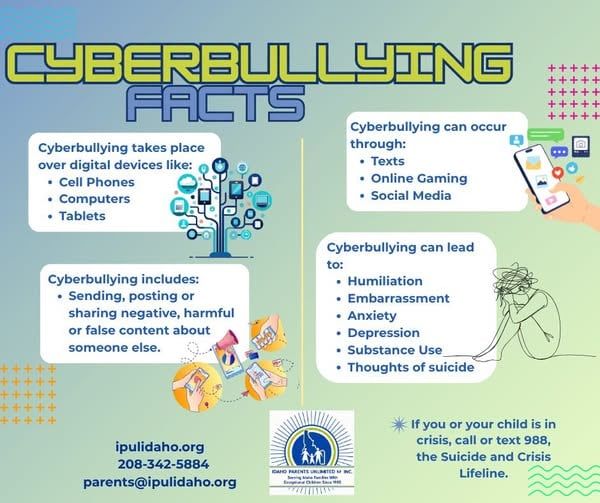
Bullying doesn’t stop at the school door — it can follow kids onto phones, games and social media. Here’s what cyberbullying looks like, so you can spot it and talk with your child about it.
Cyberbullying facts
Cyberbullying takes place over digital devices like:
Cyberbullying can occur through:
Cyberbullying includes:
Cyberbullying can lead to:
If you or your child is in crisis, call or text 988, the Suicide and Crisis Lifeline.
ipulidaho.org
208-342-5884
parents@ipulidaho.org
As we wrap up the month of October and our bullying awareness campaign, we want to remind you that every kid has their own sprinkles — the things that make them who they are. Talk with your child about celebrating differences and being kind to everyone.
Donut bully.
Our sprinkles make us special.
ipulidaho.org
208-342-5884
parents@ipulidaho.org
You don’t need to know the right questions. Tell us what’s happening and we’ll help you work out what comes next — there’s no cost, and no wrong questions.