
Home » IPUL Productions » IPUL’s Youth Corner » May 2026
IPUL's Youth Corner - May 2026
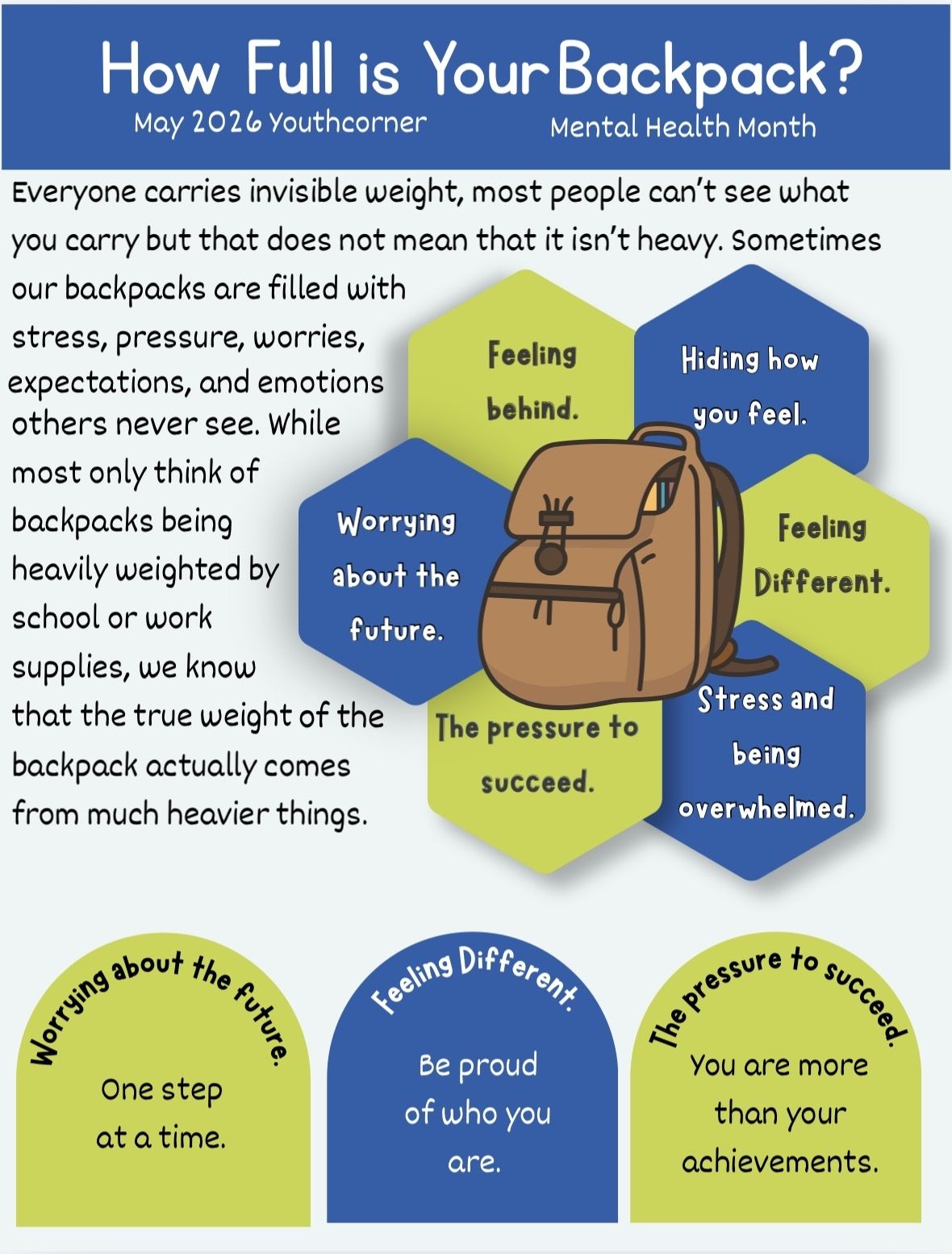
How Full is Your Backpack?
May 2026 Youth Corner
Mental Health Month
Everyone carries invisible weight, most people can’t see what you carry but that does not mean that it isn’t heavy. Sometimes our backpacks are filled with stress, pressure, worries, expectations, and emotions others never see.
While most only think of backpacks being heavily weighted by school or work supplies, we know that the true weight of the backpack actually comes from much heavier things.
Feeling behind.
Hiding how you feel.
Feeling different.
Worrying about the future.
The pressure to succeed.
Stress and being overwhelmed.
Worrying about the future.
One step at a time.
Feeling Different.
Be proud of who you are.
The pressure to succeed.
You are more than your achievements.
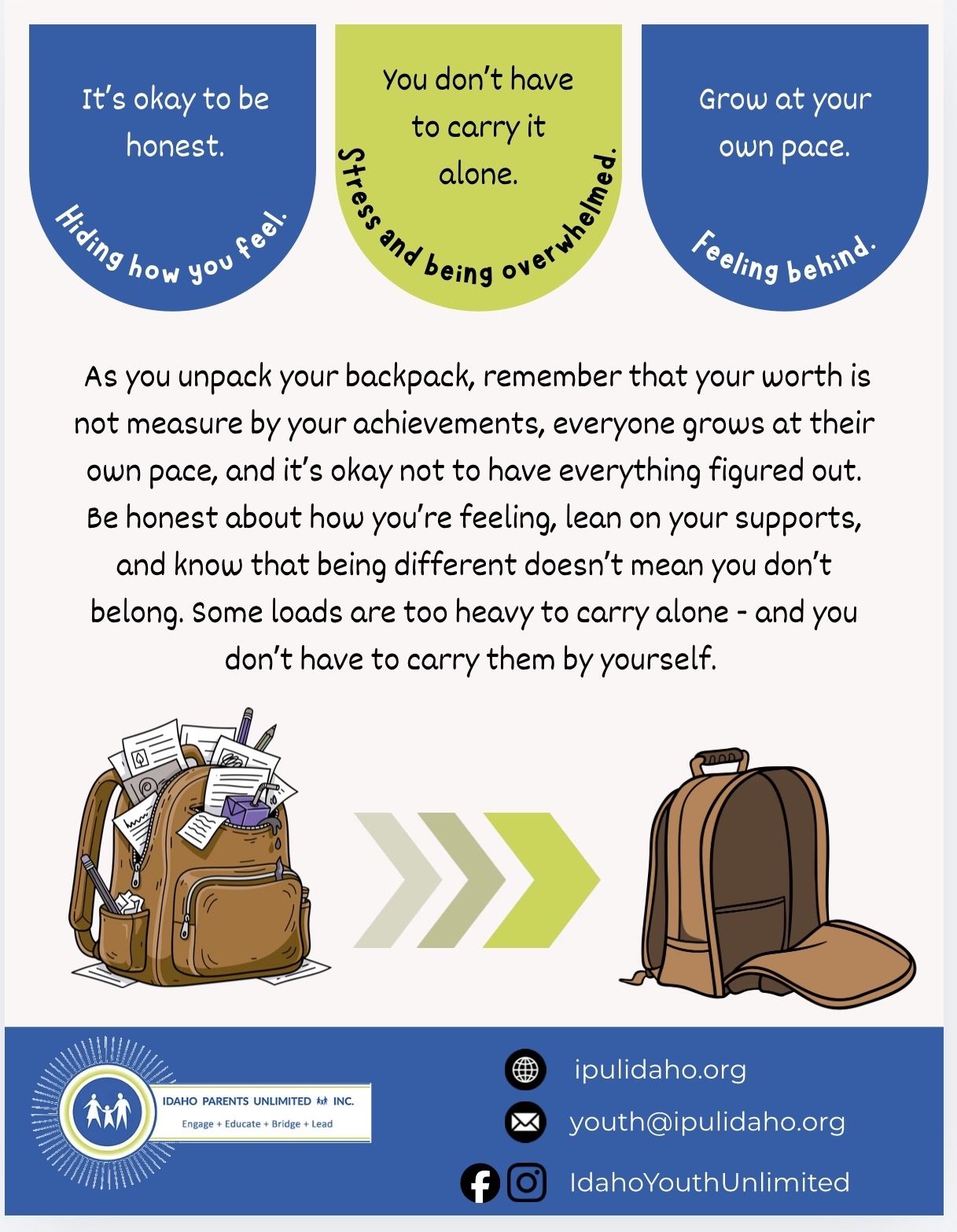
Hiding how you feel.
It’s okay to be honest.
Stress and being overwhelmed.
You don’t have to carry it alone.
Feeling behind.
Grow at your own pace.
As you unpack your backpack, remember that your worth is not measured by your achievements, everyone grows at their own pace, and it’s okay not to have everything figured out. Be honest about how you’re feeling, lean on your supports, and know that being different doesn’t mean you don’t belong. Some loads are too heavy to carry alone – and you don’t have to carry them by yourself.
ipulidaho.org
youth@ipulidaho.org
IdahoYouthUnlimited
Confidence | Support | Comfort
Q: What have you been afraid of in the past, of what would happen if you asked for what you needed?
A: One thing I have been afraid would happen in the past is judgment. Not only from my teachers, but from classmates. I was so scared of being judged for my disability and needs that it was hard for me to speak up sometimes.
Q: How did you feel when you spoke up for yourself?
A: I felt good. Advocating for myself gave me a sense of power and confidence. One important thing I’ve learned from my teachers this year is that confidence is very important.
Q: What do you mean when you say self-advocacy should be comfortable for you?
A: What I mean by that is there are three important things when it comes to self advocacy: confidence, support, and comfort. Because, believe it or not, there are some people out there who will judge you. So, find a good support group. And it doesn’t have to be just friends, it can be family, teachers, co-workers, counselors, social workers, and romantic partners. Find people you are comfortable talking to and who are willing to support your needs. Having a good support system can go a long way. It can make you feel more comfortable and confident to express your thoughts, feelings, and emotions without fear.
Q: Has learning to advocate for yourself transformed your disability into a source of strength?
A: Yes. I feel seen and heard and that’s more important than anything else. And now I hope this article helps you get the confidence to do that.
To read the full interview follow this link or find it on the Resource Padlet at ipulidaho.org:
https://drive.google.com/file/d/19unv3ZmCya9z-mL9r88F5Jjf9S6ONVYJ/view?usp=sharing
youth@ipulidaho.org
ipulidaho.org
208.342.5884
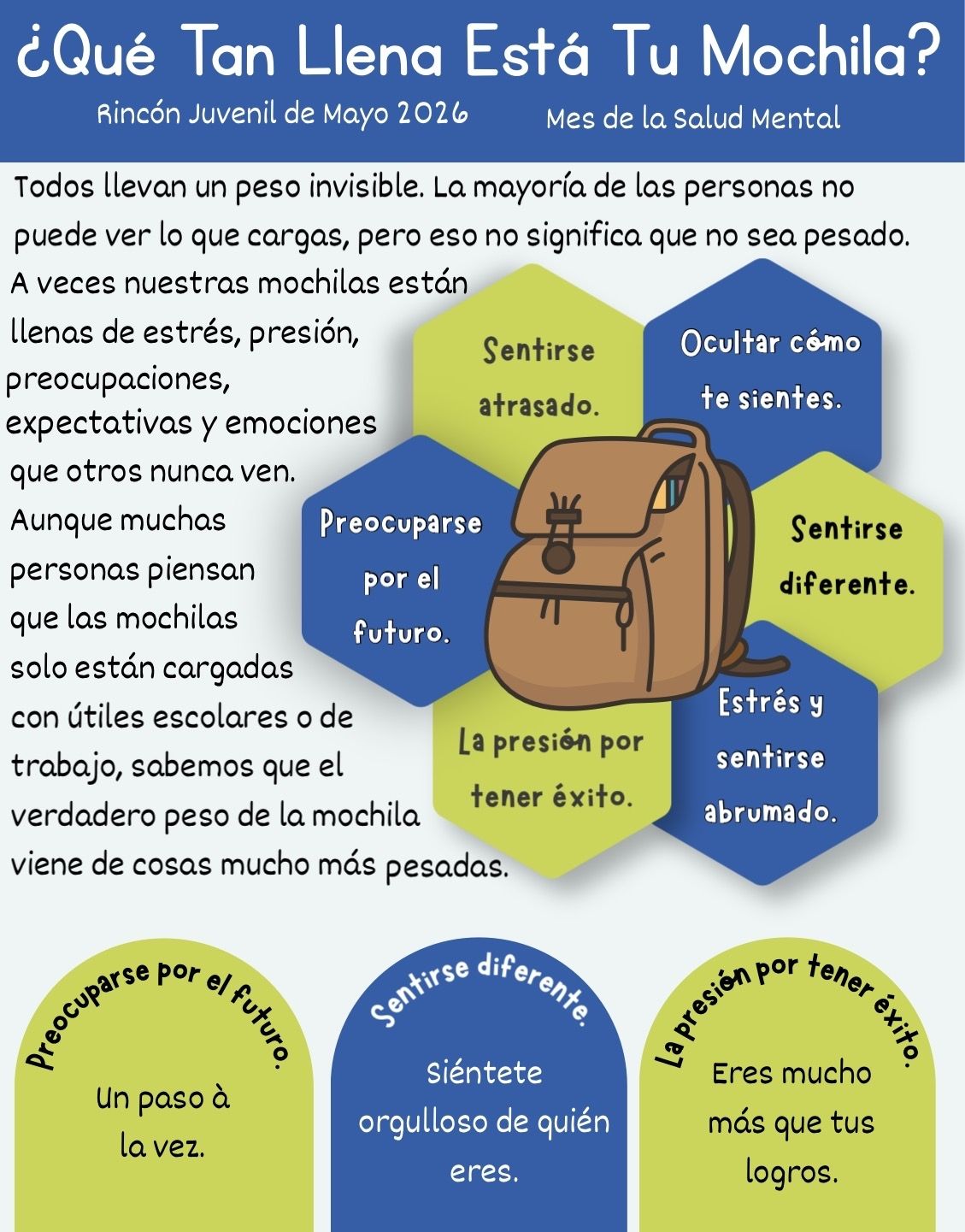
¿Qué Tan Llena Está Tu Mochila?
Rincón Juvenil de Mayo 2026
Mes de la Salud Mental
Todos llevan un peso invisible. La mayoría de las personas no puede ver lo que cargas, pero eso no significa que no sea pesado. A veces nuestras mochilas están llenas de estrés, presión, preocupaciones, expectativas y emociones que otros nunca ven.
Aunque muchas personas piensan que las mochilas solo están cargadas con útiles escolares o de trabajo, sabemos que el verdadero peso de la mochila viene de cosas mucho más pesadas.
Sentirse atrasado.
Ocultar cómo te sientes.
Sentirse diferente.
Preocuparse por el futuro.
La presión por tener éxito.
Estrés y sentirse abrumado.
Preocuparse por el futuro.
Un paso à la vez.
Sentirse diferente.
Siéntete orgulloso de quién eres.
La presión por tener éxito.
Eres mucho más que tus logros.
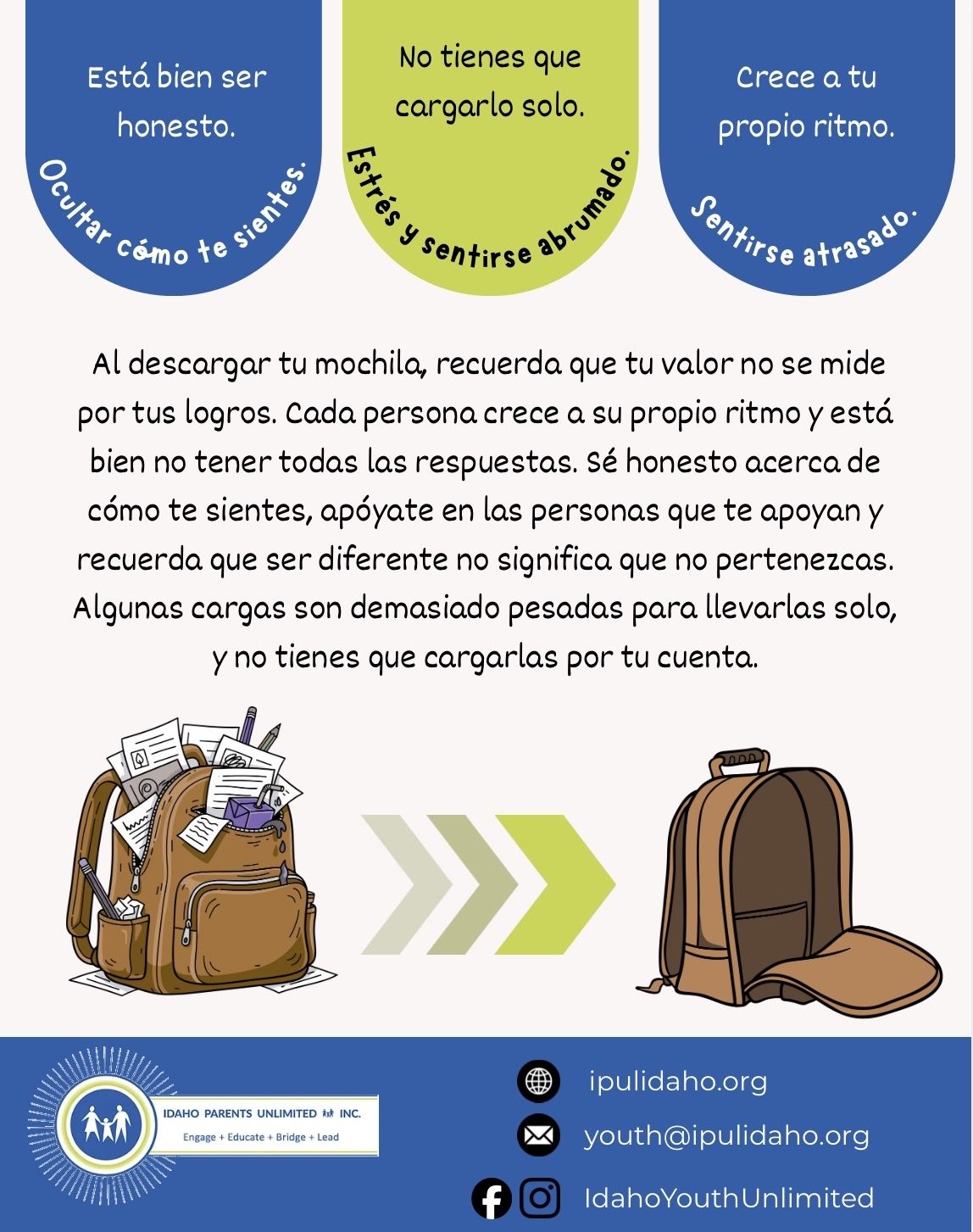
Ocultar cómo te sientes.
Está bien ser honesto.
Estrés y sentirse abrumado.
No tienes que cargarlo solo.
Sentirse atrasado.
Crece a tu propio ritmo.
Al descargar tu mochila, recuerda que tu valor no se mide por tus logros. Cada persona crece a su propio ritmo y está bien no tener todas las respuestas. Sé honesto acerca de cómo te sientes, apóyate en las personas que te apoyan y recuerda que ser diferente no significa que no pertenezcas. Algunas cargas son demasiado pesadas para llevarlas solo, y no tienes que cargarlas por tu cuenta.
ipulidaho.org
youth@ipulidaho.org
IdahoYouthUnlimited
P: ¿Qué has temido que pasara en el pasado si pedías lo que necesitabas?
R: Una cosa que he temido que pasara en el pasado es el juicio. No solo de mis maestros, sino también de mis compañeros de clase. Tenía tanto miedo de ser juzgada por mi discapacidad y mis necesidades que a veces me era difícil hablar.
P: ¿Cómo te sentiste cuando hablaste por ti misma?
R: Me sentí bien. Abogar por mí misma me dio un sentido de poder y confianza. Una cosa importante que he aprendido de mis maestros este año es que la confianza es muy importante.
P: ¿Qué quieres decir cuando dices que la auto-defensa debe ser cómoda para ti?
R: Lo que quiero decir es que hay tres cosas importantes en la auto-defensa: confianza, apoyo y comodidad. Porque, lo crean o no, hay personas que los juzgarán. Así que, encuentren un buen grupo de apoyo. Y no tiene que ser solo amigos; puede ser familia, maestros, compañeros de trabajo, consejeros, trabajadores sociales y parejas románticas. Encuentren personas con las que se sientan cómodos hablando y que estén dispuestas a apoyar sus necesidades. Tener un buen sistema de apoyo puede ser muy valioso. Puede hacerte sentir más cómodo y con más confianza para expresar tus pensamientos, sentimientos y emociones sin miedo.
P: ¿Aprender a defender tus derechos ha transformado tu discapacidad en una fuente de fortaleza?
R: Sí. Me siento vista y escuchada, y eso es lo más importante. Espero que este artículo te ayude a tener la confianza para lograrlo.
Para leer la entrevista completa, sigue este enlace o encuéntrala en el Resource Padlet en ipulidaho.org:
https://drive.google.com/file/d/19unv3ZmCya9z-mL9r88F5Jjf9S6ONVYJ/view?usp=sharing
Contacto:
youth@ipulidaho.org
ipulidaho.org
208.342.5884