
IPUL's Youth Corner - April 2026
Youth Corner
Self-Advocacy
My Voice Matters: A Young Advocate Speaks Out
Idaho Youth Sharing their Experiences — April 2026
Self Advocacy
Being empowered to make your own decisions, set goals, problem solve, and build the life you want.
– ICIE Framework
https://idahotc.com/ICIE/Framework
Q: What does self-advocacy mean for you?
Self advocacy is the ability and right to speak up for yourself and your needs in a way that is comfortable for you and clear to others.
Student Spotlight
Q: Can you tell us a little about yourself?
Hi, my name is Aleasha. I am 20 years old, and I have Cerebral Palsy. I use a wheelchair and other special devices to help me get strength in my legs and arms. I am very passionate about graphic design and writing. I’ve also memorized every song in Kpop Demon Hunters.
Q: Is advocating for yourself hard?
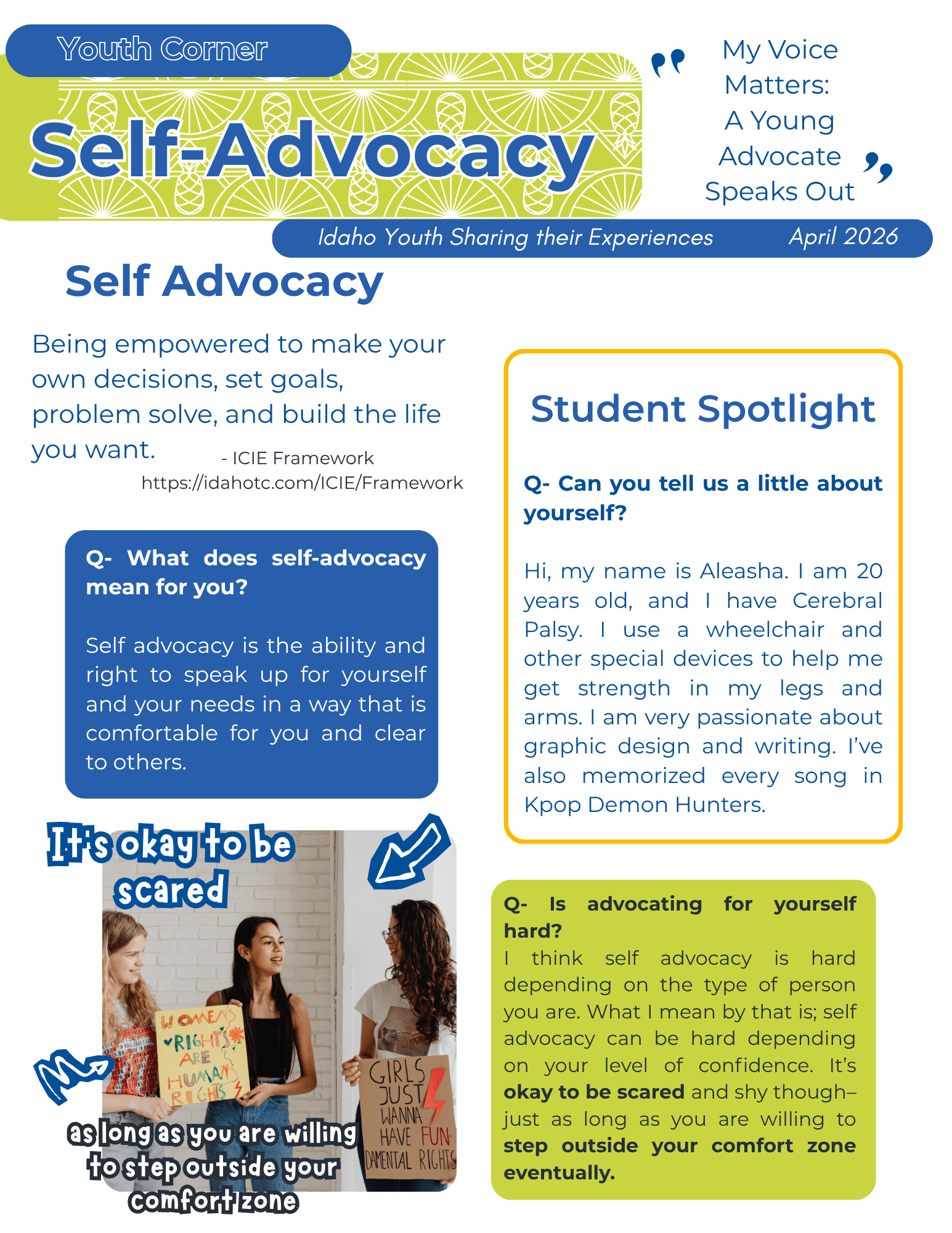
I think self advocacy is hard depending on the type of person you are. What I mean by that is; self advocacy can be hard depending on your level of confidence. It’s okay to be scared and shy though—just as long as you are willing to step outside your comfort zone eventually.
It’s okay to be scared
as long as you are willing to step outside your comfort zone
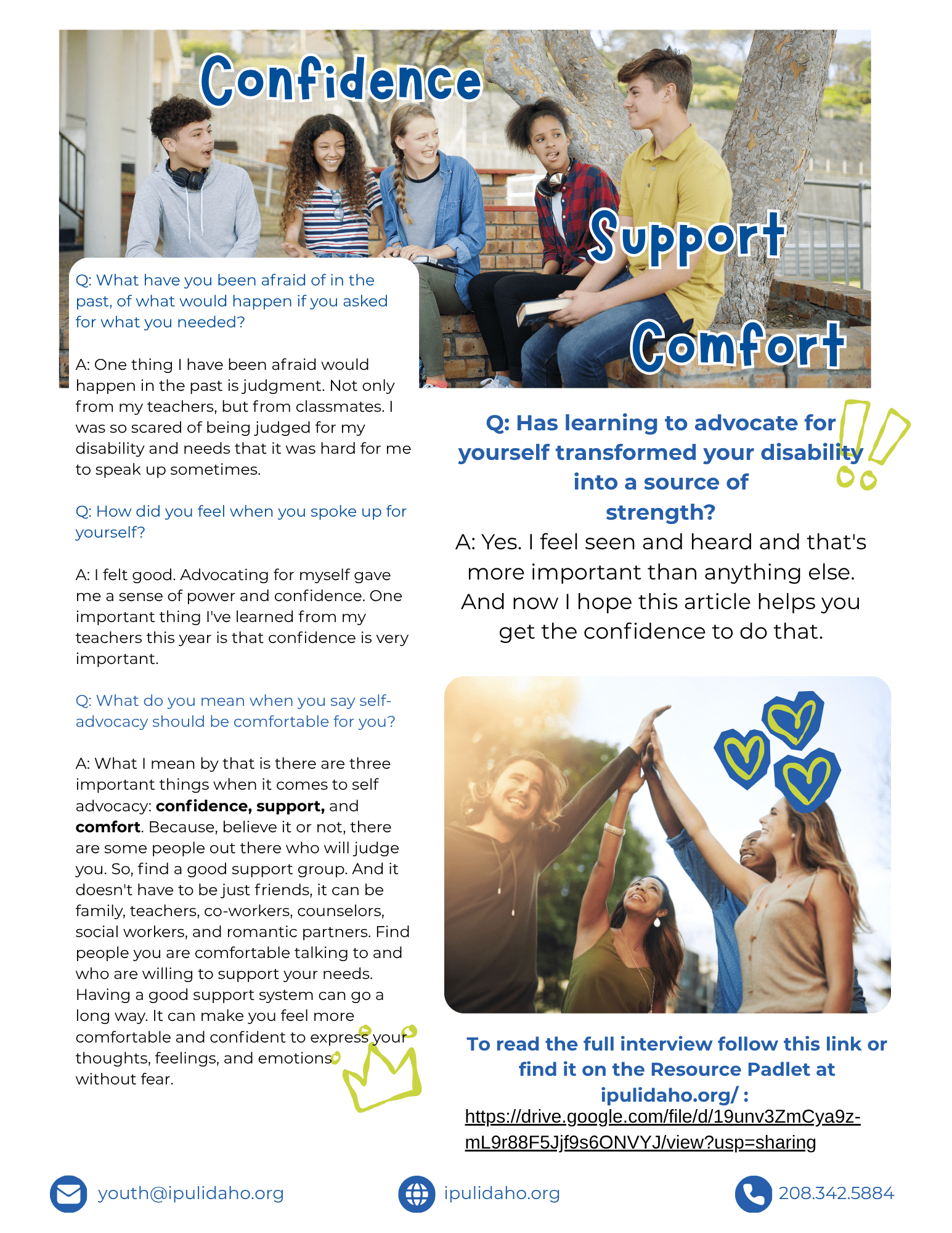
Confidence | Support | Comfort
Q: What have you been afraid of in the past, of what would happen if you asked for what you needed?
A: One thing I have been afraid would happen in the past is judgment. Not only from my teachers, but from classmates. I was so scared of being judged for my disability and needs that it was hard for me to speak up sometimes.
Q: How did you feel when you spoke up for yourself?
A: I felt good. Advocating for myself gave me a sense of power and confidence. One important thing I’ve learned from my teachers this year is that confidence is very important.
Q: What do you mean when you say self-advocacy should be comfortable for you?
A: What I mean by that is there are three important things when it comes to self advocacy: confidence, support, and comfort. Because, believe it or not, there are some people out there who will judge you. So, find a good support group. And it doesn’t have to be just friends, it can be family, teachers, co-workers, counselors, social workers, and romantic partners. Find people you are comfortable talking to and who are willing to support your needs. Having a good support system can go a long way. It can make you feel more comfortable and confident to express your thoughts, feelings, and emotions without fear.
Q: Has learning to advocate for yourself transformed your disability into a source of strength?
A: Yes. I feel seen and heard and that’s more important than anything else. And now I hope this article helps you get the confidence to do that.
To read the full interview follow this link or find it on the Resource Padlet at ipulidaho.org:
https://drive.google.com/file/d/19unv3ZmCya9z-mL9r88F5Jjf9S6ONVYJ/view?usp=sharing
youth@ipulidaho.org
ipulidaho.org
208.342.5884
Rincón Juvenil
Auto-Defensa
Mi Voz Importa: Una Joven Defensora Habla
Jóvenes de Idaho Compartiendo sus Experiencias — Abril 2026
Auto-Defensa
Estar empoderado para tomar tus propias decisiones, establecer metas, resolver problemas y construir la vida que deseas.
– ICIE Framework
https://idahotc.com/ICIE/Framework
P: ¿Qué significa la auto-defensa para ti?
La auto-defensa es la habilidad y el derecho de hablar por ti mismo y tus necesidades de una manera que sea cómoda para ti y clara para los demás.
Destacado Estudiantil
P: ¿Puedes contarnos un poco sobre ti?
Hola, mi nombre es Aleasha. Tengo 20 años y tengo Parálisis Cerebral. Uso una silla de ruedas y otros dispositivos especiales para ayudarme a ganar fuerza en mis piernas y brazos. Me apasionan mucho el diseño gráfico y la escritura. También me he memorizado cada canción de Kpop Demon Hunters.
P: ¿Es difícil abogar por ti mismo?
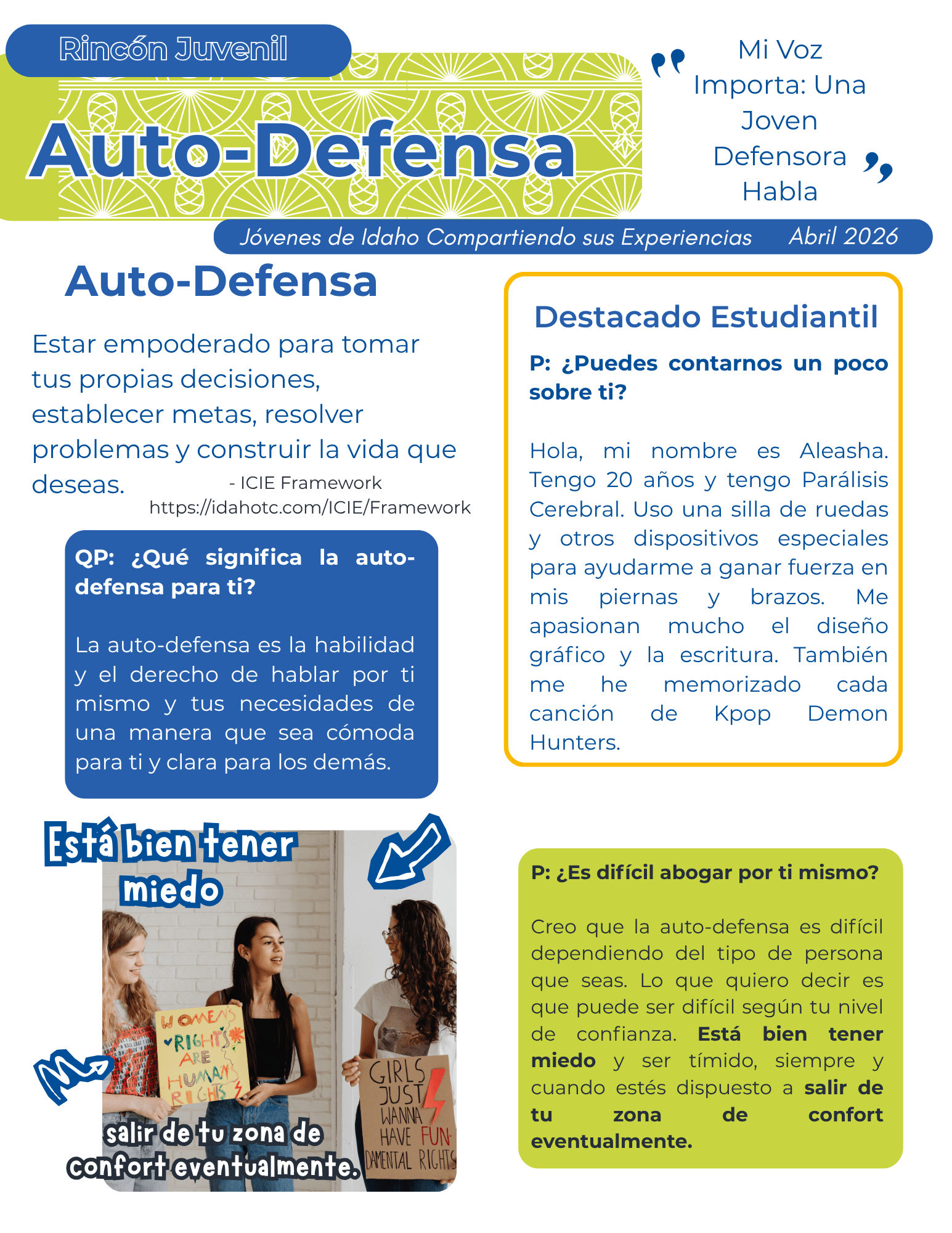
Creo que la auto-defensa es difícil dependiendo del tipo de persona que seas. Lo que quiero decir es que puede ser difícil según tu nivel de confianza. Está bien tener miedo y ser tímido, siempre y cuando estés dispuesto a salir de tu zona de confort eventualmente.
Está bien tener miedo
salir de tu zona de confort eventualmente.
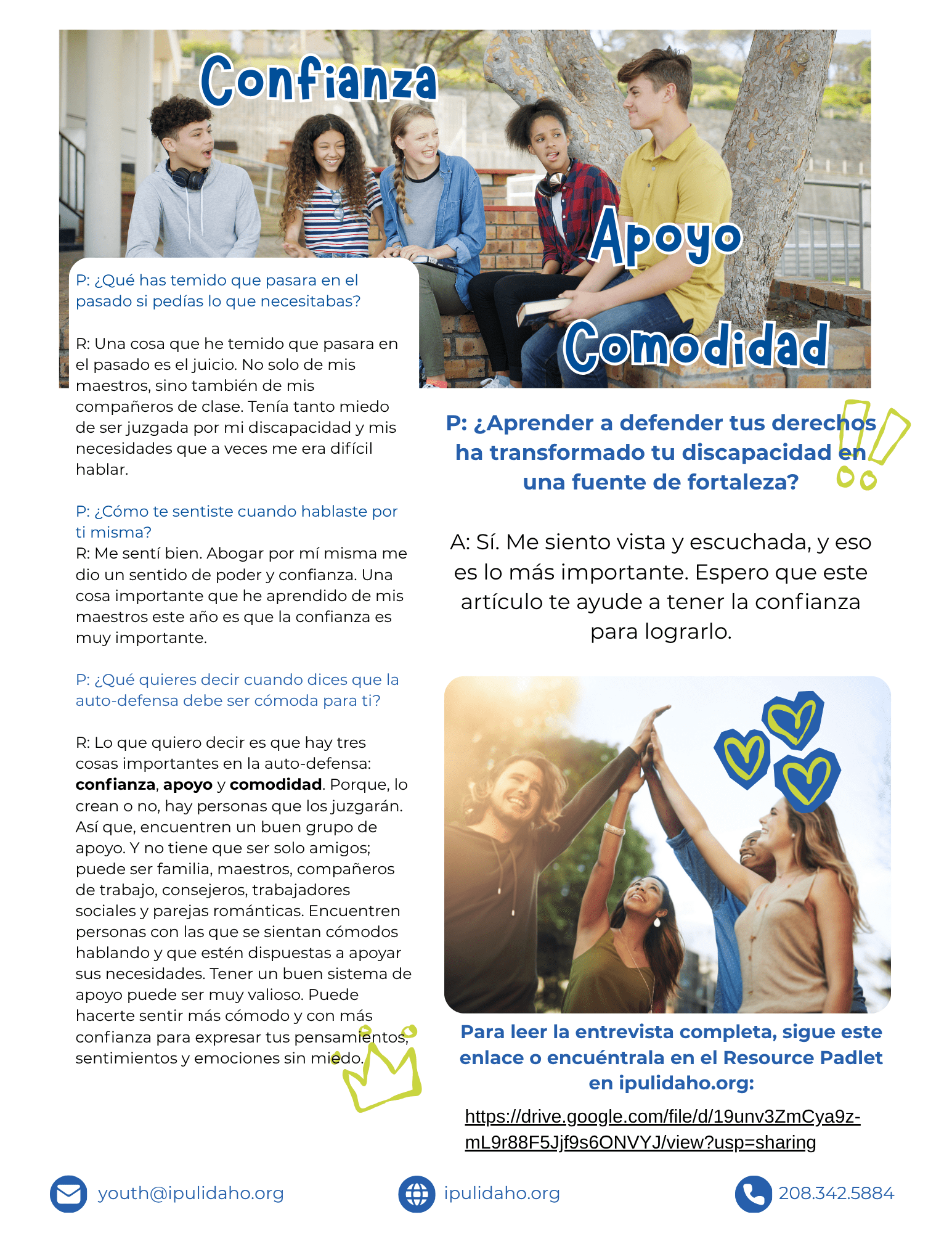
Confianza | Apoyo | Comodidad
P: ¿Qué has temido que pasara en el pasado si pedías lo que necesitabas?
R: Una cosa que he temido que pasara en el pasado es el juicio. No solo de mis maestros, sino también de mis compañeros de clase. Tenía tanto miedo de ser juzgada por mi discapacidad y mis necesidades que a veces me era difícil hablar.
P: ¿Cómo te sentiste cuando hablaste por ti misma?
R: Me sentí bien. Abogar por mí misma me dio un sentido de poder y confianza. Una cosa importante que he aprendido de mis maestros este año es que la confianza es muy importante.
P: ¿Qué quieres decir cuando dices que la auto-defensa debe ser cómoda para ti?
R: Lo que quiero decir es que hay tres cosas importantes en la auto-defensa: confianza, apoyo y comodidad. Porque, lo crean o no, hay personas que los juzgarán. Así que, encuentren un buen grupo de apoyo. Y no tiene que ser solo amigos; puede ser familia, maestros, compañeros de trabajo, consejeros, trabajadores sociales y parejas románticas. Encuentren personas con las que se sientan cómodos hablando y que estén dispuestas a apoyar sus necesidades. Tener un buen sistema de apoyo puede ser muy valioso. Puede hacerte sentir más cómodo y con más confianza para expresar tus pensamientos, sentimientos y emociones sin miedo.
P: ¿Aprender a defender tus derechos ha transformado tu discapacidad en una fuente de fortaleza?
R: Sí. Me siento vista y escuchada, y eso es lo más importante. Espero que este artículo te ayude a tener la confianza para lograrlo.
Para leer la entrevista completa, sigue este enlace o encuéntrala en el Resource Padlet en ipulidaho.org:
https://drive.google.com/file/d/19unv3ZmCya9z-mL9r88F5Jjf9S6ONVYJ/view?usp=sharing
Contacto:
youth@ipulidaho.org
ipulidaho.org
208.342.5884