
IPUL's Youth Corner - February 2026
Page 1
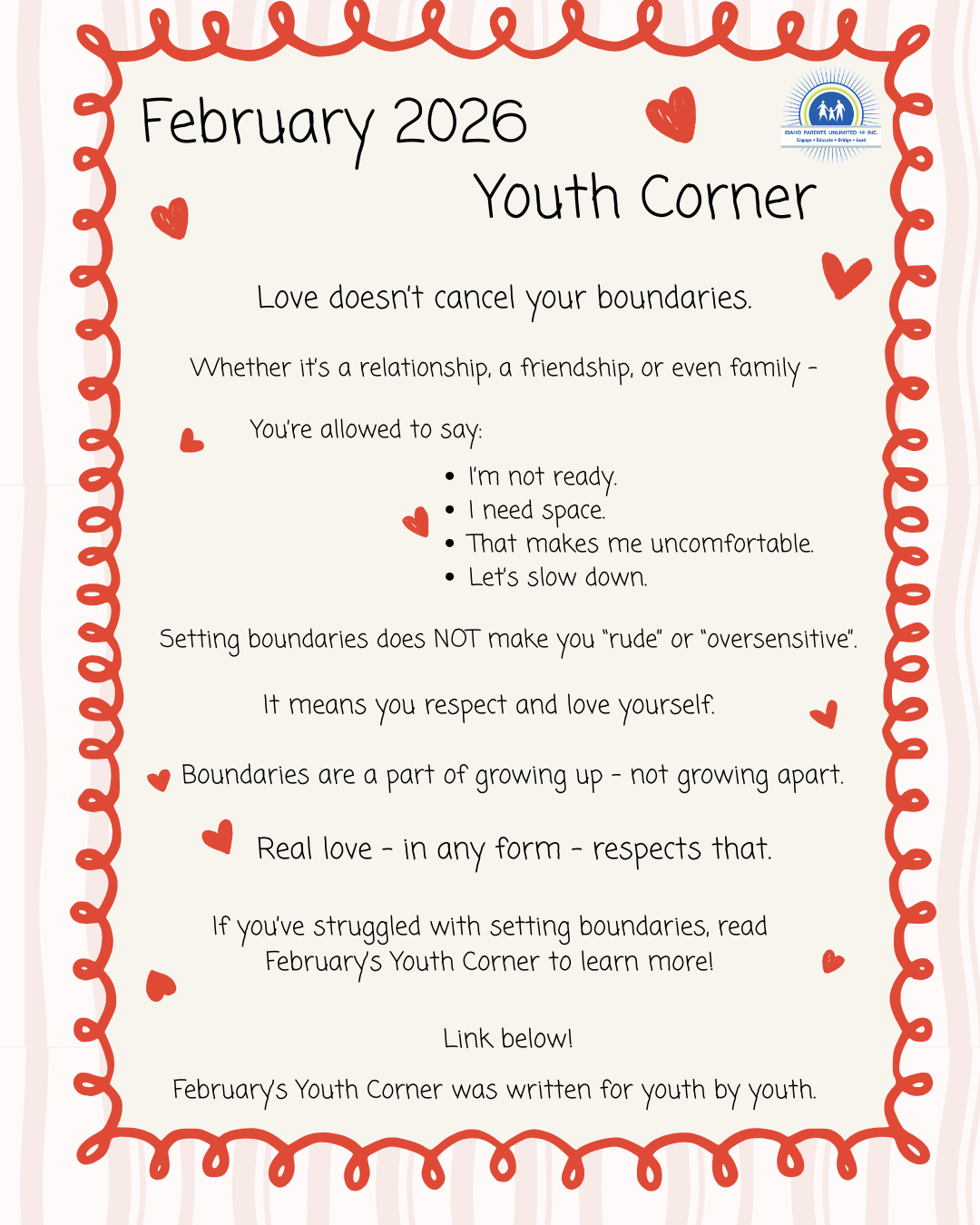
February 2026
Youth Corner
Love doesn’t cancel your boundaries.
Whether it’s a relationship, a friendship, or even family –
You’re allowed to say:
• I’m not ready.
• I need space.
• That makes me uncomfortable.
• Let’s slow down.
Setting boundaries does NOT make you “rude” or “oversensitive.”
It means you respect and love yourself.
Boundaries are a part of growing up – not growing apart.
Real love – in any form – respects that.
If you’ve struggled with setting boundaries, read February’s Youth Corner to learn more!
Link below!
February’s Youth Corner was written for youth by youth.
Page 2
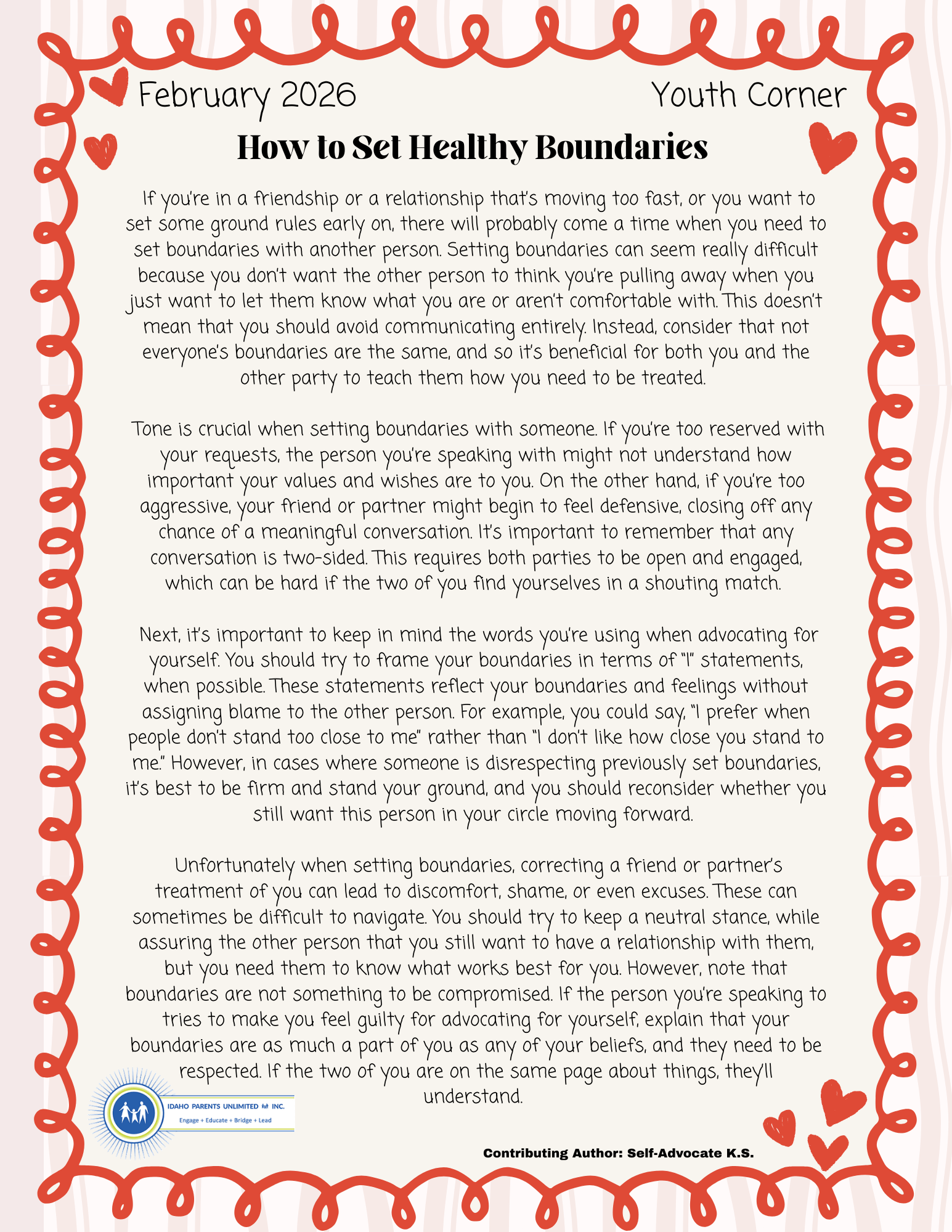
How to Set Healthy Boundaries
If you’re in a friendship or a relationship that’s moving too fast, or you want to set some ground rules early on, there will probably come a time when you need to set boundaries with another person. Setting boundaries can seem really difficult because you don’t want the other person to think you’re pulling away when you just want to let them know what you are or aren’t comfortable with. This doesn’t mean that you should avoid communicating entirely. Instead, consider that not everyone’s boundaries are the same, and so it’s beneficial for both you and the other party to teach them how you need to be treated.
Tone is crucial when setting boundaries with someone. If you’re too reserved with your requests, the person you’re speaking with might not understand how important your values and wishes are to you. On the other hand, if you’re too aggressive, your friend or partner might begin to feel defensive, closing off any chance of a meaningful conversation. It’s important to remember that any conversation is two-sided. This requires both parties to be open and engaged, which can be hard if the two of you find yourselves in a shouting match.
Next, it’s important to keep in mind the words you’re using when advocating for yourself. You should try to frame your boundaries in terms of “I” statements, when possible. These statements reflect your boundaries and feelings without assigning blame to the other person. For example, you could say, “I prefer when people don’t stand too close to me” rather than “I don’t like how close you stand to me.” However, in cases where someone is disrespecting previously set boundaries, it’s best to be firm and stand your ground, and you should reconsider whether you still want this person in your circle moving forward.
Unfortunately when setting boundaries, correcting a friend or partner’s treatment of you can lead to discomfort, shame, or even excuses. These can sometimes be difficult to navigate. You should try to keep a neutral stance, while assuring the other person that you still want to have a relationship with them, but you need them to know what works best for you. However, note that boundaries are not something to be compromised. If the person you’re speaking to tries to make you feel guilty for advocating for yourself, explain that your boundaries are as much a part of you as any of your beliefs, and they need to be respected. If the two of you are on the same page about things, they’ll understand.
Contributing Author: Self-Advocate K.S.
Página 1
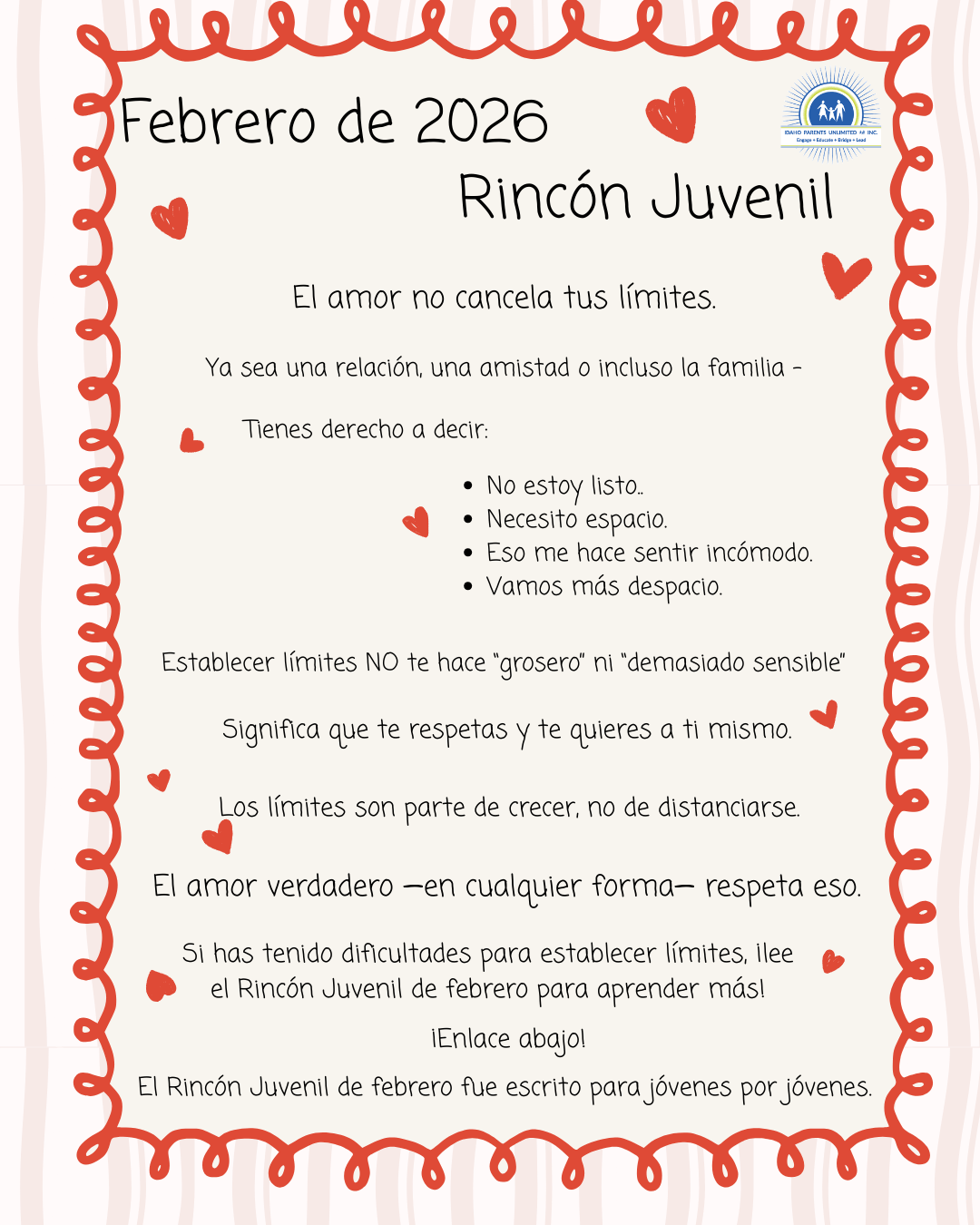
Febrero de 2026
Rincón Juvenil
El amor no cancela tus límites.
Ya sea una relación, una amistad o incluso la familia –
Tienes derecho a decir:
• No estoy listo.
• Necesito espacio.
• Eso me hace sentir incómodo.
• Vamos más despacio.
Establecer límites NO te hace “grosero” ni “demasiado sensible”
Significa que te respetas y te quieres a ti mismo.
Los límites son parte de crecer, no de distanciarse.
El amor verdadero —en cualquier forma— respeta eso.
Si has tenido dificultades para establecer límites, ¡lee el Rincón Juvenil de febrero para aprender más!
¡Enlace abajo!
El Rincón Juvenil de febrero fue escrito para jóvenes por jóvenes.
Página 2
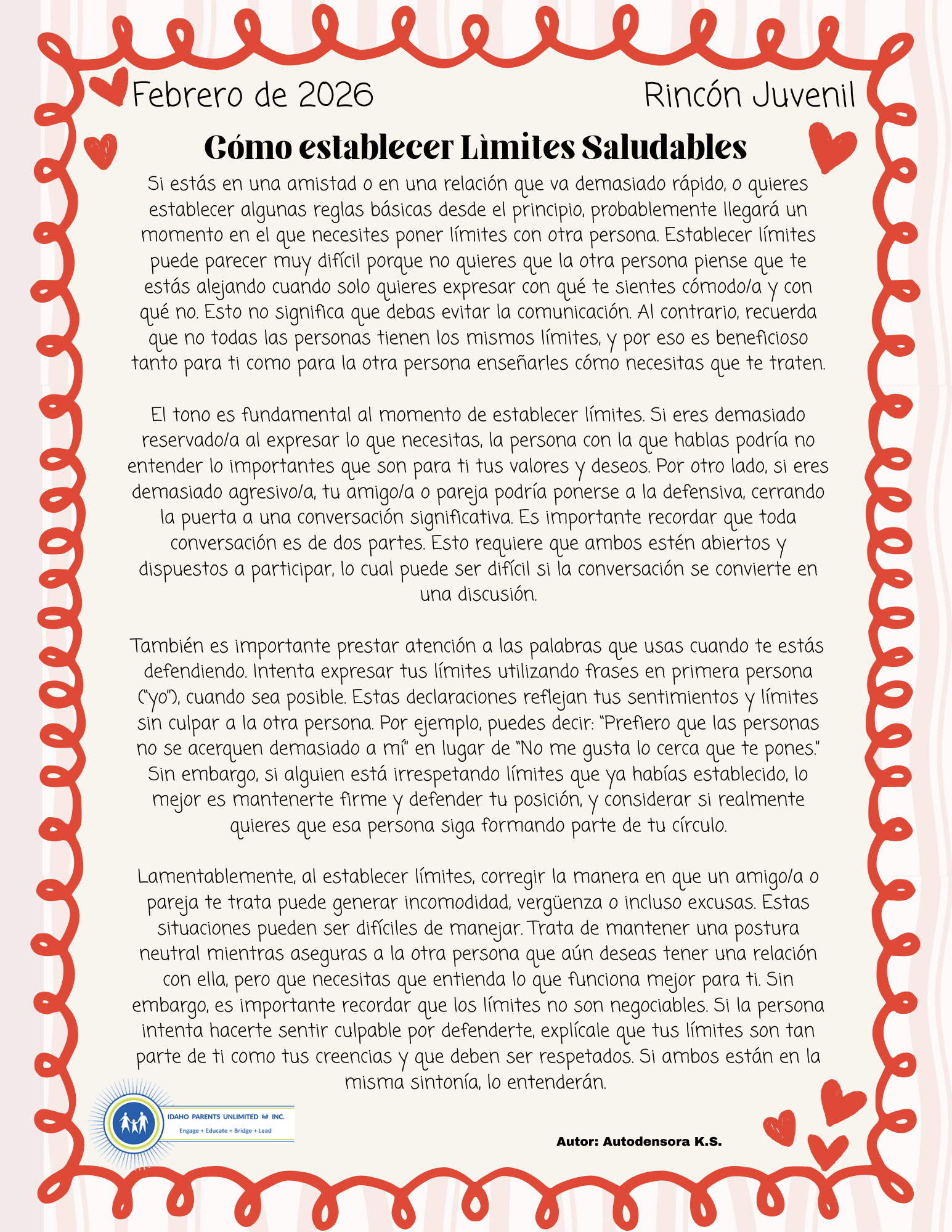
Cómo establecer Limites Saludables
Si estás en una amistad o en una relación que va demasiado rápido, o quieres establecer algunas reglas básicas desde el principio, probablemente llegará un momento en el que necesites poner límites con otra persona. Establecer límites puede parecer muy difícil porque no quieres que la otra persona piense que te estás alejando cuando solo quieres expresar con qué te sientes cómodo/a y con qué no. Esto no significa que debas evitar la comunicación. Al contrario, recuerda que no todas las personas tienen los mismos límites, y por eso es beneficioso tanto para ti como para la otra persona enseñarles cómo necesitas que te traten.
El tono es fundamental al momento de establecer límites. Si eres demasiado reservado/a al expresar lo que necesitas, la persona con la que hablas podría no entender lo importantes que son para ti tus valores y deseos. Por otro lado, si eres demasiado agresivo/a, tu amigo/a o pareja podría ponerse a la defensiva, cerrando la puerta a una conversación significativa. Es importante recordar que toda conversación es de dos partes. Esto requiere que ambos estén abiertos y dispuestos a participar, lo cual puede ser difícil si la conversación se convierte en una discusión.
También es importante prestar atención a las palabras que usas cuando te estás defendiendo. Intenta expresar tus límites utilizando frases en primera persona (“yo”), cuando sea posible. Estas declaraciones reflejan tus sentimientos y límites sin culpar a la otra persona. Por ejemplo, puedes decir: “Prefiero que las personas no se acerquen demasiado a mí” en lugar de “No me gusta lo cerca que te pones.” Sin embargo, si alguien está irrespetando límites que ya habías establecido, lo mejor es mantenerte firme y defender tu posición, y considerar si realmente quieres que esa persona siga formando parte de tu círculo.
Lamentablemente, al establecer límites, corregir la manera en que un amigo/a o pareja te trata puede generar incomodidad, vergüenza o incluso excusas. Estas situaciones pueden ser difíciles de manejar. Trata de mantener una postura neutral mientras aseguras a la otra persona que aún deseas tener una relación con ella, pero que necesitas que entienda lo que funciona mejor para ti. Sin embargo, es importante recordar que los límites no son negociables. Si la persona intenta hacerte sentir culpable por defenderte, explícales que tus límites son tan parte de ti como tus creencias y que deben ser respetados. Si ambos están en la misma sintonía, lo entenderán.
Autor: Autodensora K.S.